








100 Secret Training Ideas For Runners
Many of us have discovered training ideas which seem to work for us. Some are more tested than others. Best Road Races and The UjENA FIT Club is not endorsing these ideas but just sharing them with you. Add your Secret Training Ideas here. Include a photo when you can and be sure to name your idea. Only do one idea per post and just use enough words to explain the idea. Use examples of how it worked when possible. Hal Higdon is offering his Tip of the Day!
Click here to send us your Secret Training Idea · View all Secret Training Ideas

Posted Friday, October 31st, 2014
Strength training is important for both conditioning and injury prevention. I lifted weights and/or use exercise machines regularly in the... Read Secret Training Idea

Posted Tuesday, February 18th, 2014
by Rich StillerI didn’t plan to stop racing. I just meant to take a break. In April of 1995 I... Read Secret Training Idea

Posted Thursday, March 6th, 2014
By Christine RosenbloomHeading to the gym after work for a quick workout? Out for a morning walk with the dogs?... Read Secret Training Idea

Posted Monday, September 16th, 2013
by Hal HigdonWithin certain limits, the more miles you run the faster you can race. Double your training mileage from... Read Secret Training Idea
A Word about Strength Training
Friday, October 31st, 2014
From Hal Higdon
 Strength training is important for both conditioning and injury prevention. I lifted weights and/or use exercise machines regularly in the off-season when I was not competing seriously, but I limited strength training during the competitive season. It is wise to cut back on your strength training during the training mileage buildup. Light weights and high repetitions seem to work best for long distance runners. Do not overdo strength training if you want success as a runner. I recommend next to no lifting the last several weeks before an important race at the time when your training mileage is near peak. You may be able to continue lifting safely, but why take a chance? Comments and Feedback
Losing my Edge by RIch Stiller
Tuesday, February 18th, 2014
The difference between Bob Anderson and myself
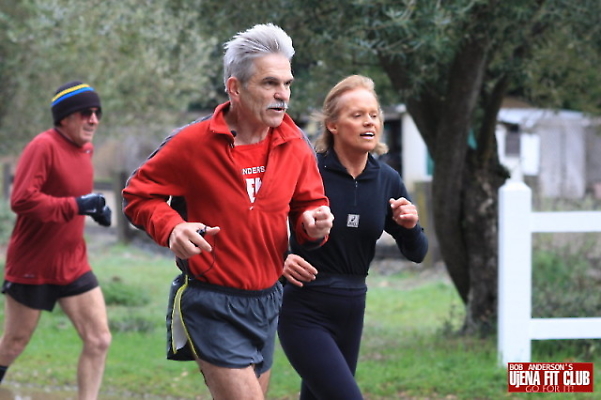 by Rich Stiller I didn’t plan to stop racing. I just meant to take a break.
In April of 1995 I turned fifty. Stretched out behind me were three decades of running which included twenty-five years of serious racing, over 500 races, and God knows how many long runs, intervals, time trials and tempo runs. Throw in the usual rain, sleet, and wind and a break was in order. I didn’t announce I was going to stop racing. Who cared outside of myself? I just quietly stepped away.
Comments and Feedback
 Interesting insight to my 50 race challenge in 2012. Thanks Rich for always being there and helping me out. Our movie A Long Run is being released in a couple of weeks. Interesting insight to my 50 race challenge in 2012. Thanks Rich for always being there and helping me out. Our movie A Long Run is being released in a couple of weeks. Bob Anderson 3/5/14 3:08 pm Richard great article, do we (runners) all have some of the same issues as we go through our lives? I have never trained like I should, I just use the gift God gave me. When I run, or workout I race or max out the workout. It always ends in injury or burnout. Thanks for the story it's going to help, the rest is up to me, and a good coach if I'll listen, and learn. Brad Chatfield 3/5/14 8:32 pm I grew up in a family of 5 boys, I was number 3. Everything we did was a race; how fast can you do that? I run every race knowing I gave it my best effort.Dan Roddy 3/7/14 7:13 am Dan I only had 3 brothers, I was the youngest of the 4; and I out did them all, but I look up to them to this day. Still it was a great day when I kicked their A. Brad Chatfield 3/7/14 11:46 am I am the second of five boys in our family. We were all very competitive even at the dinner table. Bob Anderson 3/7/14 12:24 pm Mental Performance Tips - for the Double Road Race
Thursday, August 8th, 2013
Use everything in your Double to your advantage
 by Dr JoAnn Dahlkoetter Want to know how you can reach your Double Road Race goals faster, easier, and get the results you want? Here are my top mental training tips to help you build new motivation, confidence and major breakthroughs in your training, your Double Road Race, and in your life. ADVANTAGE: Use everything in your Double Road Race to your advantage. For example, in the 10K, if another person passes you, tuck in behind and go with his or her energy for as long as possible. Then, use this technique also in your 5K leg, you may catch a “second wind” and be carried on to a personal record. CHUNKING-GOALS: Focus on your immediate target in your Double Road Race. Break your training goals down into small, manageable pieces and begin to focus only on the first portion, not the entire workout (e.g., Say to yourself: “I’m just relaxing and getting my rhythm during the first part, or the first workout session”).
Comments and Feedback
Thanks JoAnn for sharing some great ideas. You have really helped me be a better runner. Bob Anderson 8/8/13 11:42 pm Dr JoAnn will be running on Saturday...have you read her advice...I follow her advice because it works!!!! Bob Anderson 8/21/13 12:22 am Experiment with your Training
Monday, May 13th, 2013
 by Hal Higdon As you improve as a runner, you do not need always to train harder and harder and harder, moving from a novice program to an intermediate program to an advanced program. When you are near peak performance, you might actually improve more by slowing down, or running fewer miles, or doing either or both at different times. This leads us to periodization, where you spend one period of the year focusing on one form of training (say speed) and another period focusing on another (say endurance) with periods of rest between. Learn to experiment with your training Comments and Feedback
Make a Plan and Set Goals
Tuesday, October 2nd, 2012
Getting ready to run a Half Marathon
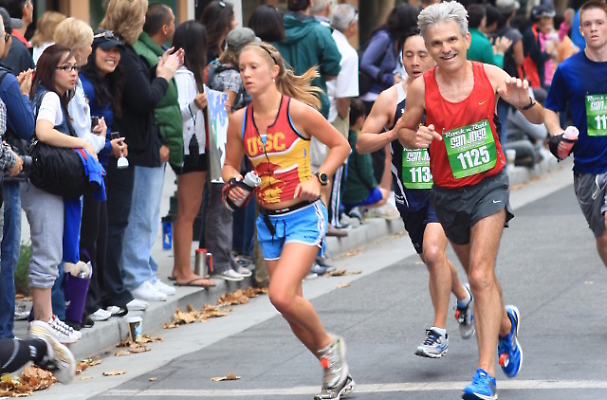 by Bob Anderson It is important to have a plan and to set goals. If you want to race a half marathon give yourself at least 10 weeks to get ready. Run 30-40 miles per week. If you are tired from the day before, walk a mile before your run or afterwords. Be sure to run a 13-15 miler twice a month. Make sure your body and mind is ready for the distance. If you don't know what pace you want to run, try this out. Time yourself for three miles, push yourself. The next day time yourself for five miles, push yourself. Figure out what pace that is per mile. Take the average of the two and add 30 seconds. This would be a good target to reach for. Put it in your mind and start thinking you can do it. Comments and Feedback
Learn From Your Races
Thursday, September 6th, 2012
"Your races are like taking a test"
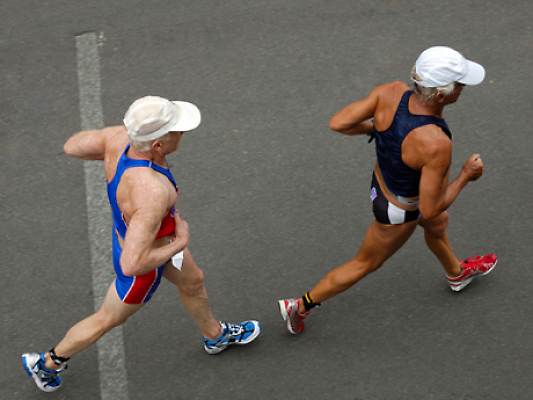 by Barry Anderson Ujena Fit Club Coach In an earlier tip, we had talked about how writing a review of your good races can be a benefit when preparing for future races. The memory recall of feeling strong and competing well during a past performance can prove to be a psychological boost. You can also learn a great deal about your training progress from your races…both good and bad races. When you run well, you gain reassurance that your workouts are, at least, meeting expectations. Chances are, your bad races will reveal specific deficiencies in your training program. Evaluate how you felt during these difficult races at various points. Did the pace seem too fast to handle during the first third of the race? Probably some faster tempo runs and some interval/fartlek would be helpful. Or, maybe you did start too fast and need to work on race pace feel during workouts. Did that hill in the second third of the race seem to take the strength out of your legs. Add some hill training, and even some weight training, to improve your overall strength. What about your finish? Were you able to maintain a solid pace in the final third of the race…and finish with a fast last 200 meters? Try adding some longer tempo runs and finish that workout with 100-200 meter strides. Your races are like taking a test. Use them to identify your strengths and provide assurances that your training is effective. And also, use them to identify weaknesses and then incorporate appropriate training modifications to improve these areas. Comments and Feedback
Blind Turns Can Give You a Racing Advantage
Tuesday, July 24th, 2012
Deflating a Rival
 by Barry Anderson Ujena Fit Club Coach This is a racing technique that may not help your time but can help you defeat that rival who seems to constantly beat you to the finish line. Though blind turns are more often seen in cross-country courses, many road races do have turns where someone that is 10-20 yards or more behind you will loose sight of you as you make the turn ahead of them. The idea here is to surge or accelerate for a short distance as the runner(s) behind lose sight of you in the turn. By the time those behind you make it through the blind turn and see you again, your lead will have increased by more than they have expected. This can be deflating to those competitors and they may begin to worry more about who is behind them than trying to catch you. Photo: up ahead looks like a perfect blind turn. This would be a good time to open up some distance on the person who is trying to finish ahead of you at the finish. Comments and Feedback
As my running progressed, I enjoyed moving from the mental state of merely trying to figure out how to finish, to thinking about strategy - whether I could implement it or not!Steve Gilbert 4/28/14 7:30 am Why the Long Socks?
Monday, July 2nd, 2012
Improve blood flow and Performance
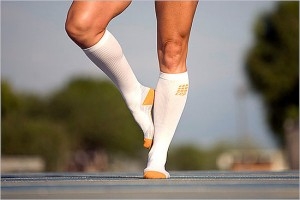 by Ujena Fit Club coach Barry Anderson “I see lots of runners wearing socks pulled up to their knees. Why the long socks?” Someone asked me this question not to long ago and I had to admit—I did not have an answer. I have also noticed that one of our members, Meb Keflezighi, often wears these long socks. There are many new “things” involved with running now that were not available in my days of running and coaching full time, and compression socks are one of them. The principal of using compression socks for the lower legs is similar to the reason that fighter jet pilots wear compression suits—only at a much lower level. When you run, particularly long distances, blood will pool in the legs due largely to gravity…including blood that contains lactic acid. It is believed that the use of compression socks can help improve blood flow through pushing blood back towards the heart.
Photo: Meb finishing this year's Bay to Breakers There have been several scientific studies with mixed results as to the overall benefit of improved blood flow and improved performance when these socks are worn during a race. One study that was reviewed did show slightly reduced lactate levels in the blood but could not rule out the psychological effect as also being a contributor to improved performance. In the studies reviewed, there is agreement that there is a faster lactate recovery rate when compression socks are worn after exercise. There is also evidence of decreased muscle soreness. These studies did suggest that graduated compression socks—those with tighter compression at the ankle end than the knee end—performed better in all tests. Give them a try if your haven’t already—particularly if you have tightness or soreness in your lower legs on a consistent basis. Maybe when Meb is not busy preparing for the Olympic marathon he can provide us with some of his thoughts on their use. Let us know your results if you have tried this training aid. Comments and Feedback
I have thought about trying these socks...I know that Ujena Fit Club member Meb swears by them...any other members wearing them?Bob Anderson 7/2/12 12:12 pm I use mine every once in a while... Mostly if I have a long run along the highway.... I have also worn them to bed at night when my legs have been tired. Not sure if they helped more physically or mentally....Shari Mernett 7/3/12 6:34 am You don't have to wear a iPod
Tuesday, June 26th, 2012
Enjoy the act of running
 by Hal Higdon Many new runners train while wearing iPods and feel that without this musical diversion they could not, or would not, run. But some races discourage iPods, because of safety considerations. I ride my bike wearing an iPod, but somehow have never taken to wearing it while running. Maybe it is because I love the act of running and do not want to be distracted by music. Comments and Feedback
The only time I tired listening to music while running was in 1965. I had a little transistor radio with an ear plug. This was before iPods. After about a mile I took it out. It was just taking too much away from my run. On the other hand, I do like running the Rock n Roll races with music every mile or to run the Bay To Breakers with music at spots along the way. BUT I just don't like it every minute in my ear. Never have and never well. How about you?Bob Anderson 6/26/12 9:53 am Not for me. I enjoy the sounds of nature - particularly in the morning workouts - and the greetings and encouragement from other runners on the trails.Barry Anderson 6/27/12 11:35 am I don't listen to music when exercise, though I can see how it might help when indoors on a tread mill or exercise bike. It is safer then anyway. There have been various studies that indicate that listening to music, esp. "synchronous" (in tempo with the exercise, up-beat, etc.) can improve performance by as much as 15% for a non-elite athlete. Google for the paper "The Psychological, Psychophysical, and Ergorenic Effects of Music in Sport: A Review and Synthesis" by Costas I. Karageorghis Gary Funck 6/27/12 10:41 pm Costas Karageorghis and Peter Terry have also authored a book, "Inside Sport Psychology", which got some play a while back. It is mentioned in this blog: http://www.guardian.co.uk/lifeandstyle/2012/apr/22/does-music-help-you-run-fasterGary Funck 6/27/12 10:50 pm I have never been able to listen to music while I run. I think for the most part its because I dont like to cary anthing bigger then my watch with me. I also dont want to get used to it because we are not allowed to take the PT test with music so I figure its best to just get used to running silently.Steven Richardson 6/28/12 5:54 am I don't listen to music when I run outside. I run with my dogs, and even though they are very well behaved, I like to hear if any traffic is coming - I would be very devastated if one of them got run over. I also like to be able to hear where the dogs are and to be alert to any wildlife that I might run into. But really, how can you enjoy the great outdoors and the wonder of mother nature if you are plugged in? I will admit to listening to music or watching a movie while on the treadmill for extended periods of time.... Shari Mernett 7/15/12 9:22 pm You Only Need One Reason
Tuesday, June 19th, 2012
Each of us can always find twenty excuses NOT to run
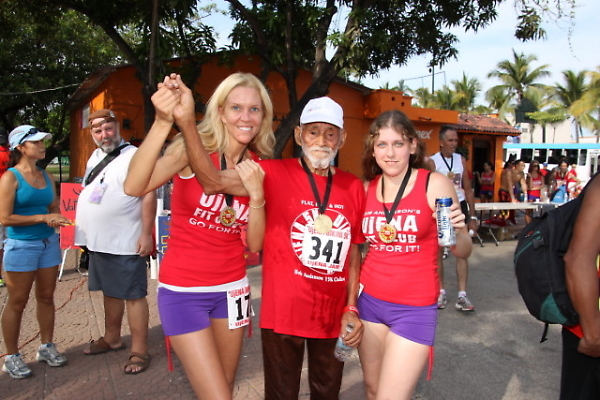 by Ujena Fit Club Coach Barry Anderson One day when our high school cross country team was running 40 x 440 on our school’s cinder track in a cold pouring rain, the excuses for why we shouldn’t be running were flying everywhere from each of us on the team. Some were even hoping for lightening. Surely the coach would let us go inside then. Our coach had one simple answer to all of these objections—”You are getting one day ahead of your competition because they aren’t working out today.” When you look at those who have a problem with being consistent in their workouts it really does come down to something just a simple—though perhaps not as extreme. And, at times, consistency will be a problem for nearly every one of us who is pursuing fitness through running or other activities. Each of us can always find twenty excuses NOT to run, but we only need to have one reason TO run. Make sure you find your one compelling reason to run and you will have no problem overcoming the excuses. Photo: the oldest person to finish the Ujena 5k was 97-year-old Migel June 16 in Puerto Vallarta. He is still walking and running regularly. Comments and Feedback
This is a very intresting article. Reading through this I thought back to a few times when I cut my workout short or just didnt run and some of the times when I just didn't want to run but did. I never really though about why I ran and why I didn't but after reading this article I relized the answer to that question. The days I quit or didn't run I had no reason to run besides just running the days I pushed myself to run was to prepare for a upcomeing race. So I defiently think this article is a great one and is defiently true.Steven Richardson 6/27/12 11:05 am Improve your chances of Running Well
Monday, June 4th, 2012
The Benefit of Race Reviews
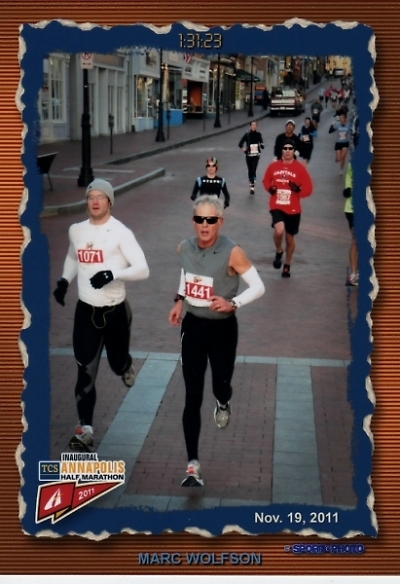 by Ujena Fit Club Coach Barry Anderson One of our Ujena Fit Club members, Marc Wolfson, recently posted a very nice review of a Half Marathon that he had raced. Though it was less than 500 words and likely only took a few minutes to write, his recap included quite a lot of detail including some important insights into why he ran well that day. I would encourage you to go to his profile on our website and read his review. There are two major benefits that a review such as Marc wrote will provide you. First, there is evidence from educational research that when you write down your thoughts—whether it be by hand in a paper journal, or typed into your online training log—you will have greater recall of the event or what ever it was that you have written about. Secondly, in preparing for a race, thinking about and visualizing a past race where you felt good and ran well can help put you in a positive frame of mind and improve your chances of running well in your race. So, after your next race where things just seemed to “click”, follow Marc’s lead and write a review of your race. We hope you post it on the Ujena Fit Club website so that all of our members can follow your progress and have a clearer understanding of how to take advantage of this simple practice.
Comments and Feedback
Setting up a Training Routine
Tuesday, May 22nd, 2012
Establish a Schedule—But be Flexible
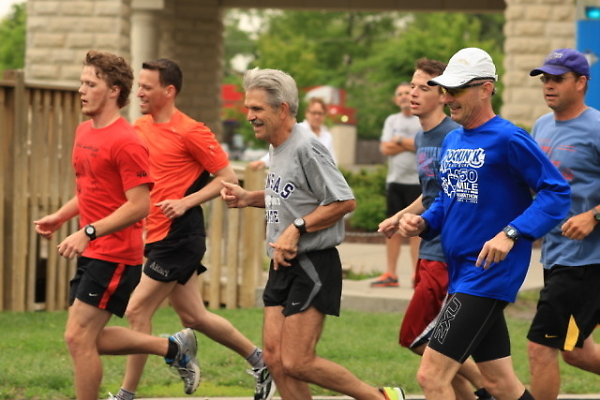 by Ujena Fit Club Coach Barry Anderson For the most part, our lives revolve around some type of time schedule. We generally wake, and eat, and sleep at relatively consistent times of the day or night. And, our bodies adapt very well to this type of routine over a period of time. Adding a regular time—or times for you twice-a-day runners—to your daily schedule for your workout is a good practice. First, it will increase the chance that you will be sure to get out the door for your daily training run. And secondly, like with the adaptations your body makes for meals and sleep, your body will adapt to your training time. Even though some days it won’t feel like it, your body will be ready to run and will also become accustomed to the rest periods between workouts. There is a potential drawback, particularly for those just getting started. Don’t become so inflexible with your schedule that you don’t workout if you miss your scheduled workout time for one reason or another. If you know you won’t be able to workout at your normal time in the afternoon, try a brief morning run. Also, if you do have to miss a workout for one reason or another on occasion, it won’t be the end of the progress you have been making. Often times a day off can be just as important as a workout so don’t fret over an occasional change in your schedule.
Photo: Training run in Manhattan Kansas. Photo by Catherine Cross Ujena Fit Club Comments and Feedback
Good Training Advice
Saturday, May 12th, 2012
"Every Workout Should Have a Clearly Defined Purpose"
 by Ujena Fit Club Coach Barry Anderson When I first started coaching, many of the distance and middle distance student-athletes I worked with were relatively new to the sport or were moving up from running shorter distances in high school. And, for the most part, they were very eager to work hard and improve their performances. Early on it became clear that most did not understand the purpose of the various workouts we would do as a part of our year-long training schedule. As a result the expected benefits were not being achieved. For some, interval training runs were too fast and completing the desired number of repetitions was not possible—thus negating the prime purpose of that workout. For the highest achievers of the group the concept of the purpose being an easy day or recovery day was the most difficult to comprehend. Running an easy 4 miles with an extended stretching session would invariably turn into a 4 mile race instead of one where they could chat and enjoy each other’s company. After implementing a procedure where the purpose of each day’s workout was clearly stated prior to the workout, there were improved race performances and fewer injuries.
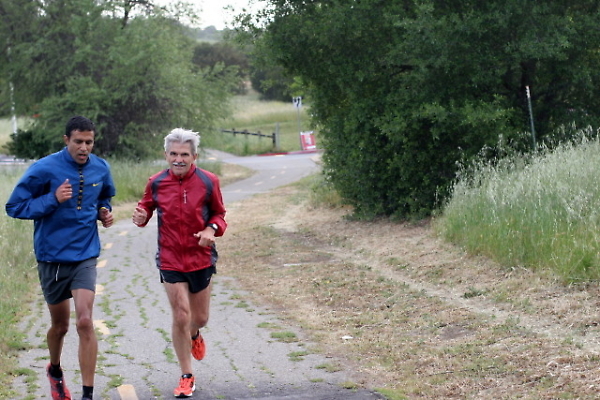
Barry Anderson was the women’s track coach for 10 years at Kansas State University. He organized the first women’s Big 8 conference championship, and coached over 30 athletes that earned All-American status. Barry just started back running last year after a 26 year layoff. He ran competitively from age 13 through college. "My brother Bob got me started running in the early 60's...and he has done it again now that I am 60." Photo: Amol and Bob doing a training run in Palo Alto recently. Photo by Michael Anderson
Comments and Feedback
Hal Higdon Tip of the Day #18
Tuesday, May 8th, 2012
"I suggest you do some strength training at least twice a week"
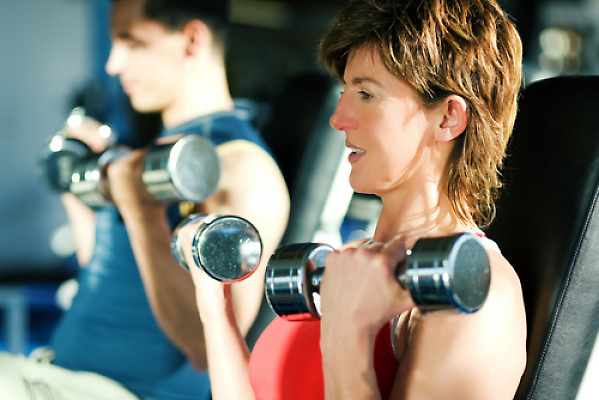 Strength training is good for runners, but what do you do? You could do push-ups or pull-ups, use free weights, or work out with various machines at a Fitness Center. Runners generally benefit if they combine light weights with a high number of repetitions, rather than pumping very heavy iron. I suggest you do some strength training at least twice a week, preferably after a short and easy run, although you can strength train on any days convenient for your business and personal schedule.
Comments and Feedback
Using Races as a Part of Your Training Program
Monday, May 7th, 2012
"Go into these “training” races with a different purpose in mind."
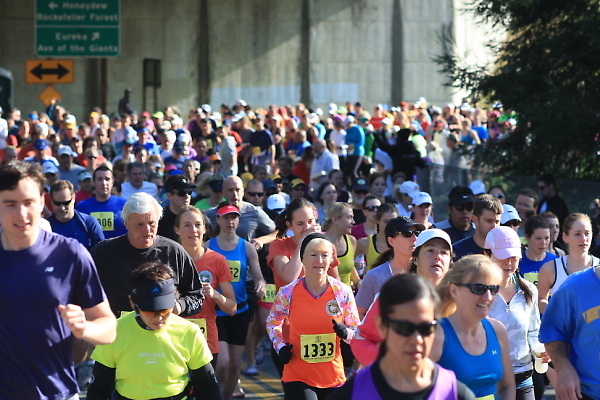 by Ujena Fit Club Coach Barry Anderson Runners who are racing 5ks and/or 10ks frequently (2-3 times per month) may want to make sure that some of these races are used as a part of your training program. This is particularly true if there are races on your schedule where you are pointing toward a personal record (PR) or want to defeat one of your top rivals. Sometimes over-racing can lead to injury and/or disappointment if your times do not improve each time you race or fail to reach your race goals. Go into these “training” races with a different purpose in mind. If you have been having trouble with finishing races strong, start out at a comfortable training run pace and try to accelerate through the end of the race. You may also want to practice surging and floating during your race. During a surge, run at a pace above your race pace for approximately 400-800 meters (or for a certain length of time) then ease into a comfortable training pace (float) for recovery. Repeat this process several times throughout the “training” race. Or, work on running even mile splits at 10-15% slower than you best race times. This can help you further understand the feel of pace. When you approach races with this purpose in mind, you will not need to taper or sacrifice your training routine. Just consider this run as one of your quality workouts for the week. Sometimes you may even be surprised at the times you run.
Barry also participated in track and cross country as a middle distance and distance runner. This included competitive racing at the AAU club level beginning at age 13 and continued through high school, with five state championship top 5 finishes, and earned two letters in his college career. Above Photo: start of the Ave of the Giants Half Marathon photo by Catherine Cross Ujena Fit Club Comments and Feedback
As you know, I am racing nearly every weekend this year between 5k and half marathon...it can be tough when you don't hit your goal but you have to shake it off and move to next week. My 5k and 4 mile time in this weekends half was almost as fast as I have been racing those distances...what do you think about that?Bob Anderson 5/7/12 2:38 pm Barry, back in the day I used races all the time in place of speed workouts. I called them 95%ers. I would not run them all out but during the race I eould move from tempo to more race-like efforts. I did much better off of these thsn track workouts which tended to tear me up.Richard Stiller 5/7/12 3:32 pm If I were running 50 races in a year I would not try to run each one all out. You only have so many really good races in you over a year. I would aim to be fresher for the longer races which are your strength and run the shorter races as Barry described. You'll still be well under your seven pace goal on those. Richard Stiller 5/7/12 3:35 pm Richard, we did this also back in the days at K-State. Bob, I don't want to be the cause of you missing your goal but would like to see you try some negative split running and not your "bank it early" style. It will take a different mental approach but, as Richard says, you will still be under your goal. In your next 5k try a first mile at 7:00-7:10 which should seem to be an easy pace based on the splits I have seen. Then pick up your tempo through the last 2 miles gradually with your last mile being the fastest. Don't worry about where you place but you will surprise yourself with how well you will run. Probably will feel better afterward...and recover faster. Your biggest danger in reaching your goal is over-racing. Can lead to injury and/or mental exhaustion. Have some fun on a few of these.Barry Anderson 5/7/12 6:23 pm I am having lunch with Bob Thursday. Will discuss but you know Bob. He is all out. But that's what makes him such a force. Richard Stiller 5/7/12 7:07 pm Very true...has been that way his entire life. Would love to see him try splits like 7:00/6:40/6:20 plus or minus 5-10 seconds on each. You are a great asset to the Fit Club Richard. Hope we can meet in person some day.Barry Anderson 5/7/12 7:19 pm I would like to run splits like this but I do like to bank time early...but I know I don't want to be in the spot I was in when running the Zippy 5k...or even the Great Race...in both cases I needed more of a warm up I think...Bob Anderson 5/8/12 11:53 am I think what Barry is saying is that you can't run each race all out.Richard Stiller 5/8/12 11:57 am I have run 20 so far all out...I don't know how else to race...and this is what makes my 50 race Challenge more interesting...dealing with injuries, burn-out, stress, etc....certainly keeps it more interesting...race 21 this weekend!!!Bob Anderson 5/8/12 12:28 pm Exactly...racing "all out" every week will take a toll both physically and mentally. Physically, you can turn this into a 1-1.5 mile hard run by running a very comfortable pace (for you) the first mile...will also get you warmed up better...the next .5-1mile is a gradual build in tempo...then see what you can do the rest of the way to the finish. Don't set an overall time goal. Of course this is like asking a life time smoker to stop cold turky.Barry Anderson 5/8/12 12:30 pm You know yourself best Bob and should do what you feel most comfortable with towards your 50 race goal. With some of the splits I have seen you run (6:30 last mile in the Zippy on a bad day...your words) I think it would be interesting to see if you could go 6:20. You would be passing people like crazy (probably, but know nothing about the race). If you went around 7:00 and 6:40 for the first 2 miles you would still have a good time. No need to fret about it however. Barry Anderson 5/8/12 1:06 pm MY thoughts on pacing are the longer the race the more important pacing becomes. In my case with many years of racing experience under my belt the 1st mile of a race is automatically built in. Thats to say my body goes out at what it feels like which usually borders on the edge of sane. Racing every week is totally different as I know from cross-country season when you run something like 12 races week after week. Keeping your head in the game becomes spotty and more attention must be paid to the mind and body. I still try to push as hard as I can this time of year but as I said it's only 12 weeks , not 50 races and 1 year.Bill Dunn 5/8/12 4:32 pm Word of the day...gloves by Nancy Hobbs
Monday, April 30th, 2012
"My suggestion to all trail runners is to wear gloves on the trail."
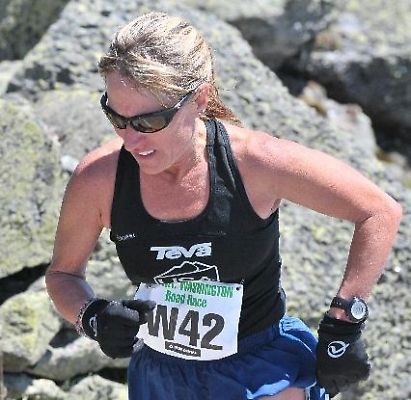 Probably not a secret, but...having heard two recent stories about runners taking bad falls on the trails I suggest wearing some type of hand protection -- i.e. gloves -- on all trail runs. The first woman, who will remain nameless, was heading out on a trail run with her husband. Within 100 feet of the car, which was parked at the trail head (actually, this was a U.S. Forest Service 4WD access road leading to a variety of trails), she took a tumble. Her hand and elbow took the brunt of the fall, and she also twisted her ankle. No gloves. Interestingly enough, this woman is a massage therapist. I spent some time talking to her and said, "Gloves are the word of the day. You rely on your hands for your business, protecting them is a good idea." The second incident was relayed to me by a friend. This fellow was running a trail race, slipped and fell and sliced a chunk of skin off his palm. He finished the race, but I can tell you he was sore. My suggestion to all trail runners is to wear gloves on the trail. One of my friends wears the cycling type glove which includes some padding on the palm. I personally prefer a full glove. My fingers are important to me as well as the rest of the skin on my hands. I have taken many a fall myself and my glove have often saved me from nettles, burrs, scrapes, cactus points, gravel, etc. Sometimes I just run in a jog bra and shorts, but I still wear my gloves on the trails. Like our first example, even seemingly flat and non-technical terrain can have an errant rock, or tree root to cause a tumble. I also like wearing gloves because they can act as a tissue for a drippy nose, or protect your hands from swelling with temperature variations (this happens a lot to me). Happy trails! Nancy Hobbs is one of the key reasons why Trail running has exploded. Just 20 years ago there were less than 400 events and now there is close to 2000. Read her Ujena Fit Club Interview. Nancy will be regularly sharing your advice with us.
Comments and Feedback
Hal Higdon Tip of the Day #16
Tuesday, March 13th, 2012
Speedwork can make you a faster runner
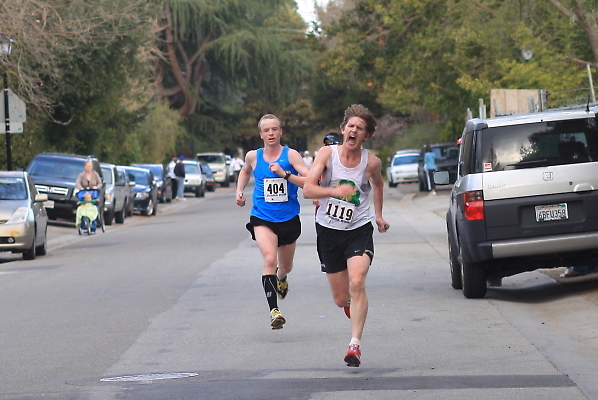
Photo Above: Digging deep at the end of the Juana Run 8k in Palo Alto March 10. Photo by Catherine Cross Ujena Fit Club "Among my most enjoyable activities is helping runners train for the marathon. I estimate that I have assisted a half million runners reach the finish line of 26 mile 385 yard races," says Hal Higdon Comments and Feedback
Taking a Rest Day Off from Bill Dunn
Saturday, February 18th, 2012
"Recovery time is training time"
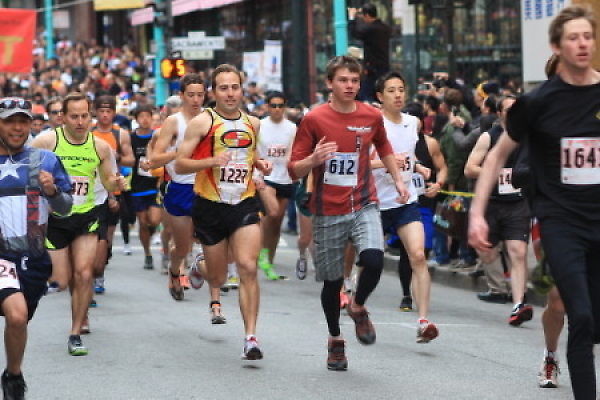
Photo Above: Start of the Chinese New Year Run 10k/5k held Feb 19 in San Francisco Photo by Catherine Cross Ujena Fit Club Bill Dunn has been running races for nearly 35 years logging in over 75,000 miles. Back in 1983 he ran a 53:34 10 miler and is currently training to go under 70 minutes at age 64. Comments and Feedback
A running tip from Bob Anderson
Thursday, February 16th, 2012
What type of person are you? Do you make things happen, just watch or ask what happen?

Photo: The Anderson and Wall families makes things happen. Bob Anderson's grandkids ran the 1k 12 and under kids race in Pacific Grove Feb 12, Lisa and Bob ran the 10k and Justin ran the 5k. Mike ran out to the 1.5 mile to get footage for our doc "A Long Run" and Catherine (taking this photo) covered the starting line. This was one of four family running trips we do annually and have been doing it for four years. Photo by Catherine Cross Ujena Fit Club Comments and Feedback
Hal Higdon Tip of the Day #13
Monday, February 13th, 2012
Don't worry about running form...just put one foot in front of the other
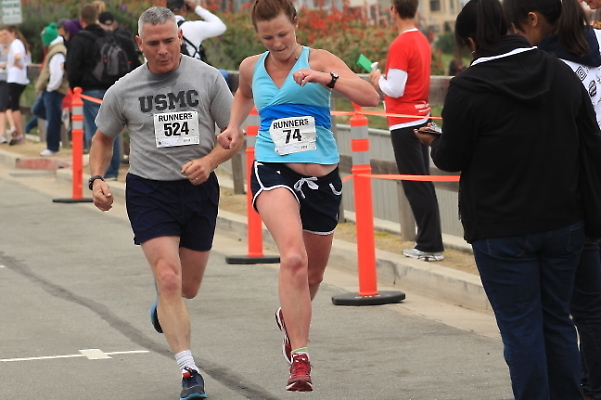
Photo Above: at the finish line of the Together with Love 10k/5k over the weekend in Pacific Grove, CA Feb 12, 2012 photo by Catherine Cross Ujena Fit Club "Among my most enjoyable activities is helping runners train for the marathon. I estimate that I have assisted a half million runners reach the finish line of 26 mile 385 yard races," says Hal Higdon Comments and Feedback
One caveat from my experience: A beginning runner may not understand the importance of glute involvement. I injured my knees training for my first marathon because I had always run with quad and hamstring strength. When my long runs went over 2:30, I lost knee stability and caused quite a bit of damage. Fortunately, with accurate diagnosis and improved technique I was able to overcome the problem.Steve Gilbert 4/28/14 7:37 am Hal Higdon Tip of the Day #11
Monday, February 6th, 2012
You Could Gain Weight after you Start Running
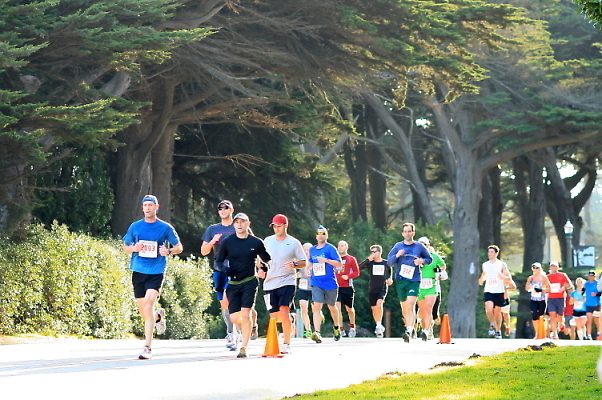
Photo Above: Kasier SF Half Marathon ran through Golden Gate Park Feb 5, 2012. photo by Catherine Cross Ujena Fit Club "Among my most enjoyable activities is helping runners train for the marathon. I estimate that I have assisted a half million runners reach the finish line of 26 mile 385 yard races," says Hal Higdon Comments and Feedback
Hal Higdon Tip of the Day #10
Thursday, February 2nd, 2012
Having a Partner will Help the Miles seem Shorter
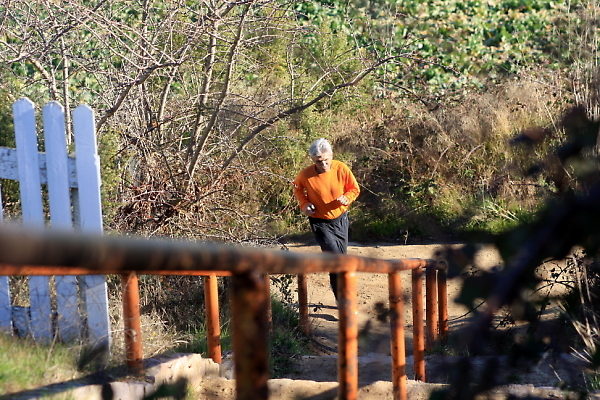
Photo Above: It does help to find a partner when you are just starting out. But once you get past the starting point, you won't need as much partner to get you out the door. photo by Catherine Cross Ujena Fit Club "Among my most enjoyable activities is helping runners train for the marathon. I estimate that I have assisted a half million runners reach the finish line of 26 mile 385 yard races," says Hal Higdon
Comments and Feedback
Hal Higdon Tip of the Day #8
Friday, January 27th, 2012
Give Cross-Training a Try when Injuried
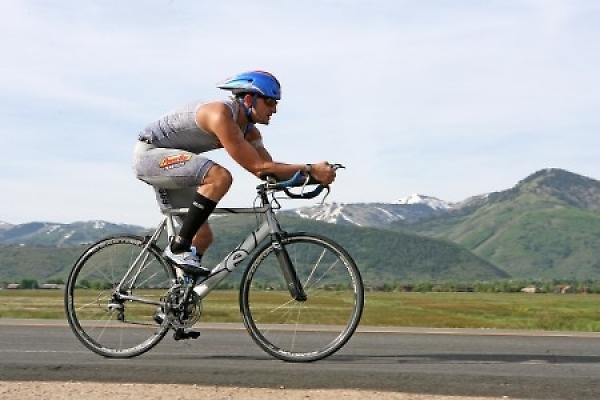
Photo Above: Rane Rauschenberg uses cross-training including swimming in his regular routine now. Check out his UjENA FIT Club interview "I refuse to live a boring life." "Among my most enjoyable activities is helping runners train for the marathon. I estimate that I have assisted a half million runners reach the finish line of 26 mile 385 yard races," says Hal Higdon Comments and Feedback
Hal Higdon Tip of the Day #6
Tuesday, January 24th, 2012
Getting out of a Bad Patch

Photo Above: A runner finishing the Ball Park 5k. We all want to run faster...the trick is to figure out how. photo by Catherine Cross Ujena Fit Club "Among my most enjoyable activities is helping runners train for the marathon. I estimate that I have assisted a half million runners reach the finish line of 26 mile 385 yard races," says Hal Higdon Comments and Feedback
Hal Higdon Tip of the Day #5
Monday, January 23rd, 2012
Stop Racing Before Hitting The Wall
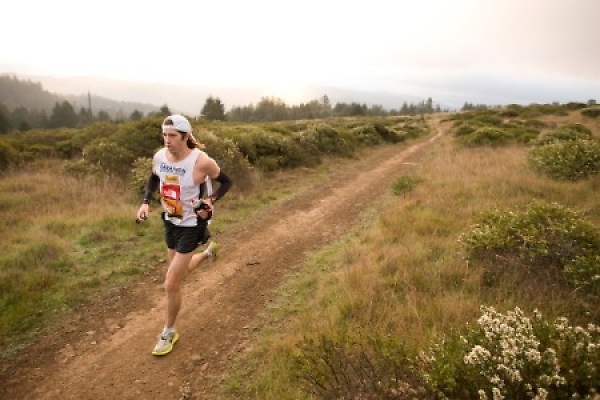
Photo Above: It doesn't seem that Michael Wardian ever hits the wall. His range is between 5k and 135 miles. But then that's Michael not the average runner. "Among my most enjoyable activities is helping runners train for the marathon. I estimate that I have assisted a half million runners reach the finish line of 26 mile 385 yard races," says Hal Higdon Comments and Feedback
Hal Higdon Tip of the Day #3
Friday, January 20th, 2012
Are You Racing Too Much?
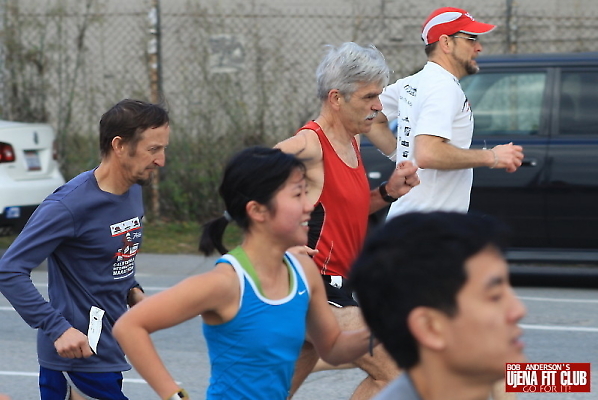
Photo Above: Ballpark 5k in San Francisco photo by Catherine Cross UjENA FIT Club "Among my most enjoyable activities is helping runners train for the marathon. I estimate that I have assisted a half million runners reach the finish line of 26 mile 385 yard races," says Hal Higdon Comments and Feedback
Hal Higdon Tip of the Day #1
Thursday, January 19th, 2012
Finishing Marathons Strong
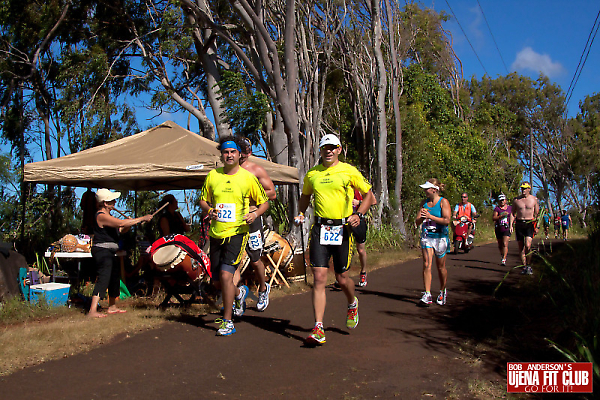
Photo Above: The Kauai Marathon and Half Marathon are considered one of the most beautiful destination races in the world. More Info "Among my most enjoyable activities is helping runners train for the marathon. I estimate that I have assisted a half million runners reach the finish line of 26 mile 385 yard races," says Hal Higdon
Comments and Feedback
Working the Fastwitch Muscles
Tuesday, December 6th, 2011
Increase Your Stride
 by Sonny Workman I usually do these on the track. Start with a 300m slow/easy jog, I try and do this in 2:30, yes, thats slow! Then once I hit the 300m mark, I tag a 100m HARD but CONTROLLED. I do eight of these and every other week I add 1-2 reps until I reach the 22-24 mark in a workout. Benefits: Really works the fast-witch muscles and within a few weeks you'll increase your stride, which results in faster times- which is everyone's goal! Give them a try someday, I wouldn't recommend doing this workout but once a week, can really cause some havoc on the body, if done correctly you'll probably be sore in the hammie area. Good Luck club members! Comments and Feedback
Three mile test with HRM
Tuesday, December 6th, 2011
Use a Heart Rate Monitor To Improve
 By Richard Stiller My favorite secret workout is one I call "The Truth". Runners often wonder what shape their in especially if they haven't raced in awhile. This requires a runner to have a heart rate monitor and know their true max heart rate and their resting pulse. If you know these two numbers you can use the site below to figure out your 90% of max number. Comments and Feedback
I have thought about getting a heart monitor for some time. Which one works best for you? Good article...Bob Anderson 12/6/11 11:02 pm Pace-Up Repeat Miles Track Workout
Monday, December 5th, 2011
I ran a 59:17 10 Miler With This Workout
 by Bob Anderson I started doing this workout several years ago and it worked. The best place to do it is on the track. I think the best distance is the mile but you can vary the distance if you want too. When I was ran 59:17 for 10 miles at age 53 (2001) I was doing this type of workout once a week. One of my best Pace-Up Miles ever was when I did five of them in these times: 5:53, 5:46, 5:38, 5:32, 5:23. I would be ready to race after doing these workouts. However, they are very hard to do on your own and you have to work up to it. I got away from doing my Pace-Up Repeat Miles workout but I want to start again. It has been hard for me to get back into mind set to do these. However, I know my times would improve. But there is also the chance of getting injuried too. You don't have to do five. You can do as few as two. I would not recommend doing more than six. I noticed that Kim Smith who placed 5th at the New York City Marathon ran six one mile on the track when getting ready. She ran them all right around five minutes. Give the Pace Up Miles workout a try but just start with two. Be sure the second one is faster than the first. Comments and Feedback
About a month ago I did two one mile on the track. The first was 6:38 and the second 6:19. A week later I ran my best half marathon of the year. I need to get back to these workouts...Bob Anderson 12/6/11 11:48 pm |
,,,,, |
Eating Well for Running
Thursday, March 6th, 2014
Tips for Fueling Your Workout without Over Doing It
 By Christine Rosenbloom Here are some tips for fueling your workout without sabotaging the calorie-burning effort of exercise. Comments and Feedback
How many Miles Should I run weekly?
Monday, September 16th, 2013
At Some Point you begin to break down!
 by Hal Higdon Within certain limits, the more miles you run the faster you can race. Double your training mileage from 25 to 50 miles a week, and you should be able to run a faster marathon. Double it again to 100 miles a week, and you should become faster still. But achieving success is more complicated than that, since at some mileage point, we all begin to break down. Injuries occur. Fatigue sets in. For some runners, that point is lower or higher than for others. It is not only the miles you run, but the running of those miles intelligently that results in the greatest success. Comments and Feedback
How many miles should we run weekly? Or how much time do we have to spend running? How many miles are you running currently? Good advice Hal...Bob Anderson 9/16/13 4:21 pm Defining a Tempo Run
Tuesday, August 6th, 2013
A good way to get in shape
 by Hal Higdon Some coaches and runners define a tempo run as a fast continuous run at or near race pace. In my training book I define tempo runs as workouts where you start slow, build to a fast pace in the middle, then cruise home at an easier pace. But which is the better workout? Sometimes we need to free our minds and allow our bodies to dictate the pace of any one workout. What difference does it make what some coach calls a run as long as it gets you in shape? Comments and Feedback
Runners Need Carbs
Monday, November 12th, 2012
The Atkins Diet is a Disaster for Distance Runners
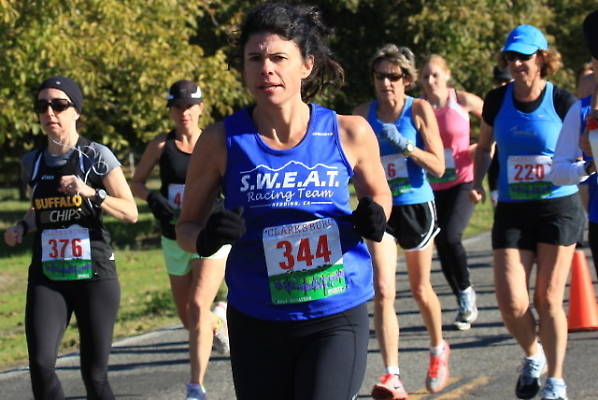 by Hal Higdon
Low-carb diets do not work for runners. The Atkins Diet is a disaster for distance runners, as are any weight-loss diets that limit carbohydrate intake. Go on one of these fad diets, and you may experience a sudden reduction in weight, as measured by your bedroom scale. This weight loss, often dramatic, provides an instant boost to the dieter's ego and may cause the individual to stay on the diet ... and continue to lose weight. That's good. But the instant loss is artificial, since the shift in the protein/carbohydrate ratio causes the body to lose fluids. Dehydration can be a danger for those training for a road race, and particularly in the race itself. Add to that the discomfort caused by constipation, another low-carb side effect.
Comments and Feedback
Intake of fluids while racing in a Marathon
Saturday, September 29th, 2012
I used this advice and took 18 minutes off my PR
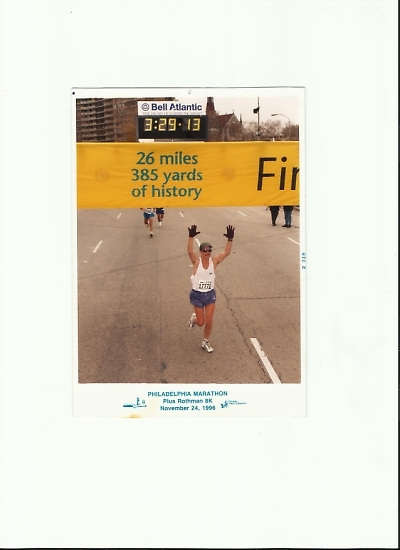 by Jesse Crandall Victory Loves Preparation ! I pride myself on always trying to learn something new about my sport that I love so much ! I came up with new information regarding proper hydration while running/racing in a marathon ! Here is what I learned to be a success. I drank WATER ONLY for the first half of the matrathon....then.....on the back end....13 miles straight to the finish, I incorporated a sport drink, Goo's, Energy bars.....The reason....is that at the start your body is ready ! You have eaten & hydrated yourself so that you can stand at the starting line ! There is no need for SUGAR! Your body is NOT CRAVING the stuff! NOT YET anyway ! Your good until midway....the 13th mile & beyond. This is when your brain tells you....SUGAR, CARBS....now is when you begin to ingest a sport drink of your choice so that you give the body what it is craving! Any sooner, like at the beginning, risks the effects of a "doughnut high," you'll get that tired feeling....and ...it will affect your performance! I practiced this new theory....I took 18 minutes off my PR.....I ran like a REEBOK..... (what is a REEBOK) Look it up ! A lot of people don't know what it is! It's good for a beer at your favorite watering hole ! guaranteed ! ') BaaaaZiinnng !
Comments and Feedback
Take an ice bath to assist in recovery
Friday, August 3rd, 2012
Learn to listen to what your body is telling you
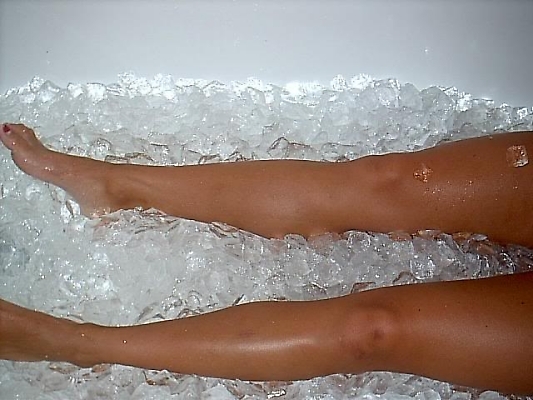 By Alisa Harvey (2007 Masters Athlete of the Year) Your legs will have a heavy burning feeling during runs which will indicate that you may need to have either a day off or another light jog instead of a workout. If your alarm wakes you up before you naturally wake up in the morning it may be time to assess the amount of sleep you are getting; you may need an extra day off from running. A big signal that indicates that you may not be ready to work hard again is when you try to do a fast stride and you just can't seem to reach that last gear like you could before. Day-to-day stresses will also play a factor in how your body recovers during and after runs. A major emotional event may mandate that you take at least one day off from training. Listen to your body. The amount of healing for any given runner depends on the individual's gender, age, and health. A woman will need more time to recover from any given workout than a man because of a man's higher testosterone levels, muscle mass, and blood volume. Masters runners generally need more time to recover due to decreased hormone levels of men and women as they age. A runner who is suffering from an illness will often cause himself more damage or delay in healing if he attempts to work out while sick. Be sure to consult your physician when you are confronted with any type of illness before engaging in strenuous exercise. Continuing to train through illness or an injury can prolong healing. Taking an after exercise plunge in an ice water bath (a tub of 12 to 15 degrees Celsius ice water) is a common practice among many elite athletes as a way to recover faster, and reduce muscle pain and soreness after intense training sessions or competitions. From elite runners like Paula Radcliff, the ice bath is a standard practice routine. Tips for Resting Well 1. Give yourself at least one day of complete rest per week. 2. Use a heart rate monitor to help assess your recovery 3. Never do two hard track sessions on consecutive days. 4. Always err on the side of too much rest between intervals. 5. Take an ice bath to assist in recovery. 6. Get a sports massage; it is well worth the cost. 7. Stop the workout if you begin to slow considerably from predicted pace. Thanks Washington Running Report. Comments and Feedback
Or you can turn a garden hose on your legs after a run. An old horse trainers trick. Jack Foster the great masters runner from NZ used this all the time.Richard Stiller 8/11/12 3:36 pm Race for speed
Saturday, July 21st, 2012
Use your races for your speed work!
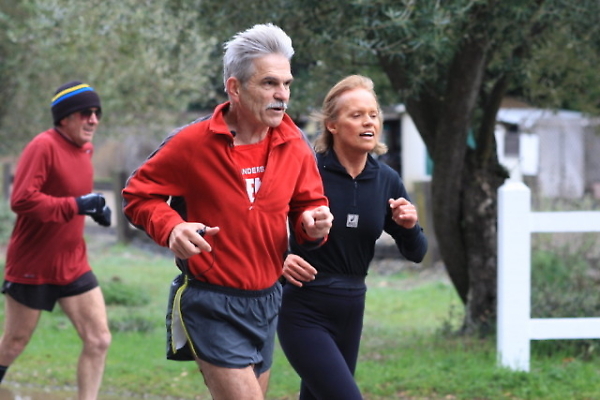 by Rich Stiller Speed work is really overrated for improving performance. I found out years ago that a runner can just as effectively race themselves into shape. The biggest issue is often balancing speed work and racing in the same week. Well, the answer is...DON'T. Let's say you are eight weeks way from an important race. Rather than doing speed work every week pick 4-5 races and run those instead. You don't have to bash each race. Run 2-3 hard and the others as strong tempo runs. The benefits are that you'll have less chance of getting injured plus your peak racing period will last longer. I was most successful when I focused on getting in miles during the week and racing on the weekends. My fastest 5k came off no speed work for three months prior. Just 3 or 4 tune up races. My best 2 miler came off of no speed work at all. I ran a 1500 meter on the track one week in 4:16, then ran a 3.5 mile club run in 18:22 and then ran two miles on the track in 9:44. This was a 14 second PR. My one mile PR came from running the mile on successive weeks at all comers meets. I went from 4:49-4:31 by running five one mile races. Does speed work have a place in a runners training schedule? Sure. Now and then run a speed workout on a non race week to get feedback on your conditioning. For example, if I could run 3 x one mile in a 4:59 average, that told me I was ready to race. That didn't mean I had to go out and try to better that workout. By the way, long time world class runner Mark Nenow rarely did speed work. He raced for speed. Joe Henderson wrote "Long Slow Distance" more than forty years ago. This was the main theme of his classic book. Photo: Rich doing an easy training run with Bob, JoAnn, and Bill earlier in the year. Comments and Feedback
Pre-Race Routine
Tuesday, June 26th, 2012
Sometimes It is the Little Things than can help you run a Faster Race
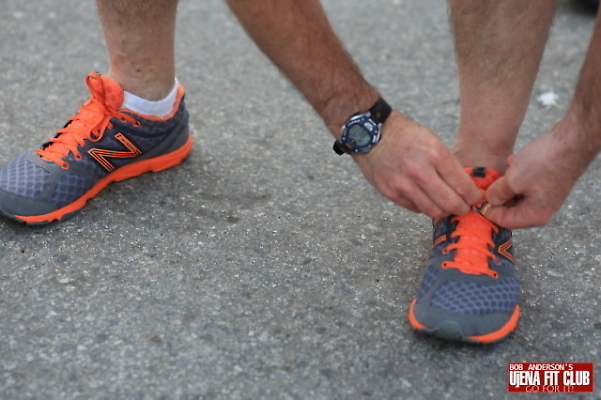 by Ujena Fit Club Coach Barry Anderson Does anyone else have a pre-race routine that you use nearly every time you race? Do you double tie your racing shoes but not your warm-up shoes? Do you always eat the same thing prior to the race—at a certain time before the race start? Do you wear the same socks—or always go sock-less? One of the last minute things that was always a part of my pre-race routine was to fold my race number as small as possible before attaching to my racing singlet. I always thought that I would gain a small advantage due to better aerodynamics—probably not true in the real world of science but in my mind is was a advantage. If you plan to add this practice to your pre-race routine, make sure that you follow instructions for securing your race number in case a portion of the number is removed at the finish line. We would like to hear from you. Let us know about your own idiosyncrasies in your pre-race routine. Comments and Feedback
I believe in doing the same things before a race. Here is what I do. I get up at least two hours before the start. I will eat a half of a banana right away. I will drink a cup of coffee (decaf right now). I will go to the bathroom. I will NOT put on my racing shoes or racing singlet (always wear a red singlet and black racing shorts) until 15-20 minutes before the start. I will warm up in sweat pants, t-shirt and sweatshirt. I like to run a mile warmup. I want to break a sweat. Then I will put on my racing singlet and start getting used to the temp about 15 minutes before the start. I will go to the bathroom again and would have most likely gone 3-4 times since getting up. I want to clear my system. I will drink some water. Before putting on my racing flats I will rub my feet with Icy Hot. Makes my feet feel warm and different than a training run. (I am sure I am the only person in the world who does this. I also hardly ever get blisters and this might help that too.) I will eat one pack of glu before races 10k or longer. And I will make sure to carry one for 10 mile plus races. I will for sure double knot my shoes and tuck the laces into the other laces. I might have taken one Aleve one hour before too. Started this ten years back and it seems to help? I will get a good starting spot and off I go...Bob Anderson 6/26/12 10:18 am Wow! Your have had lots of practice at your pre-race routine this year...got it down pat! Like to see enough effort in your warm up to break a sweat...very important.Barry Anderson 6/26/12 11:58 am Keep a Running Log
Tuesday, June 26th, 2012
It will help you establish or evaluate short and long-term goals
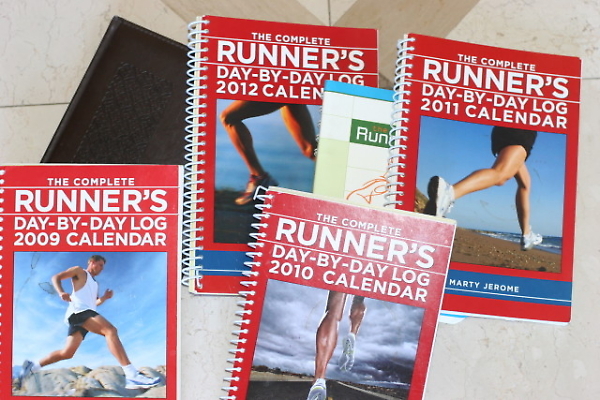 by Ujena Fit Club Coach Barry Anderson Scribble it down with your own shorthand in a spiral notebook. Note it carefully in your neatly columned runners log books—including resting heart rate, body weight, and other pertinent details of the day. Or, use the Ujena Fitness Log to enter it to share with other members and for weekly prizes. What ever your do…keep it, your workout results, in a workout log of some type. One of the important things related to a successful fitness program is to maintain a reliable way to record your daily workouts or activities. The workout log can also be used for noting other activities like a round of golf—with a notation of walked or rode. Keep the information you enter concerning your running in some detail, particularly if your plans include running as one of your primary forms of exercise and/or are intending to run races.
The information you enter can be used to plan your future training schedule and to establish or evaluate short and long-term goals. When you race well, your training log information can help you review your running in the weeks prior to the race and provide insight for future race preparation. Finally, when you have the misfortune to experience an injury or excessive soreness, your first source of information about possible causes should be your training log. Comments and Feedback
I have been keeping a diary for years. It has really helped me get through injuries (knowing what I did before) and to plan for races. I also now post deaily on the Ujena Fit Club. I know I have run a lot of extra good miles because I want to reach the next level of points. How about you?Bob Anderson 6/26/12 9:55 am I have been using my garmin to keep track of logs and its really helped me keep my motivation levels up along with preparing for my races. I used to run without loging my runs and in every case I would quit after a few months. I think its very important to keep track of your progress in order to keep going with your workouts.Steven Richardson 6/27/12 11:00 am Your body need easy Days
Thursday, June 7th, 2012
The Most Important Day to Rest
 by Ujena Fit Club Coach Barry Anderson So you have a big race coming up at the end of the week on Saturday that you have marked on your schedule as one you want to go for your personal best time. It is an accurately measured, yet flat and fast course. Your training has been going well and all things are pointing to a great race. The last couple of weeks you have been tapering your workouts to help assure fresh legs on race day. In all this build-up to your big race, there is one more thing you should consider in your race preparation. While it may seem most logical to make sure you rest on Friday for your Saturday race, there is research that suggests that there is a better day for your primary day of rest. The next time you are pointing for that big Saturday race, try making Thursday your primary day of rest for the week. Go for a very short and very easy run with some stretching afterwards. Keep in mind that the purpose of this workout is REST. On Friday you can exert yourself a little more. Many runners will use their normal race warm up as their Friday workout before a big race. Be sure to include/add a few (2-3) 300-600 meter runs at race pace along with the strides that you usually include in your race warm-ups. Complete your Friday workout with your usual stretching routine. Try this practice of resting two days ahead of your races and you should feel fresh and ready to go on race day.
Comments and Feedback
Dealing with Bad Days
Thursday, May 24th, 2012
You Will Have Bad Days
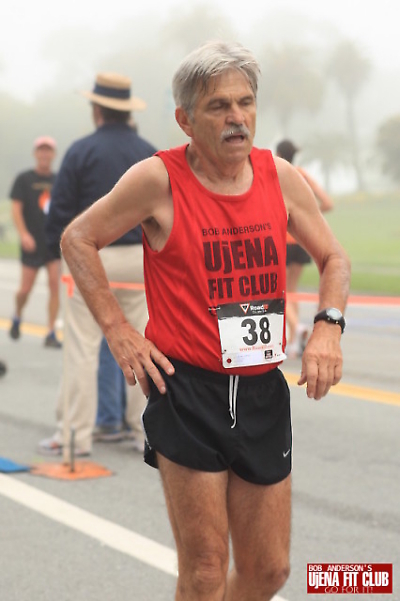 by Ujena Fit Club Coach Barry Anderson I have never met a runner in the past 45 years that has not had a bad day during a workout or race for one reason or another. And for most, there will be many bad days. Maybe your breathing is a little more labored or your legs just don’t feel good—even on an easy run. Or, perhaps, you had to cut a workout short or did not reach the interval times you had planned. It happens to all of us. The most important thing to remember is not to let these bad days discourage you in your efforts to improve. Try to find some positives in these bad days. Sometimes the only positive may be the fact that you got out the door and did the your best. It is also a good idea to look for possible reasons that you had a bad day. Review your training logs and see if your bad day could be due to increases in weekly mileage or the intensity of earlier workouts. Sleep, nutrition, weather conditions, and impending illness can also be a cause.
Barry Anderson was the women’s track coach for 10 years at Kansas State University. He organized the first women’s Big 8 conference championship, and coached over 30 athletes that earned All-American status. Photo: at the end of a bad race (Bob Anderson Zippy 5k SF) Comments and Feedback
I love this article because it relates to the past two weeks for me. I have not felt good at all for the last two weeks. I continued on even though my miliage was lacking and then ran a marathon. Even though I felt bad for two weeks and I just new I would do terrable on the race I ran it anyway. Ended up setting PB times from 9 miles up in once race. Of course anything over 13.1 miles would be a pb no matter what time I got. Just like you said in the article een though you feel bad and it seems you are not improving you are. Dont let the bad days force you to quite!Steven Richardson 6/4/12 7:30 am Hal Higdon Tip of the Day #19
Thursday, May 17th, 2012
Getting Ready to Race
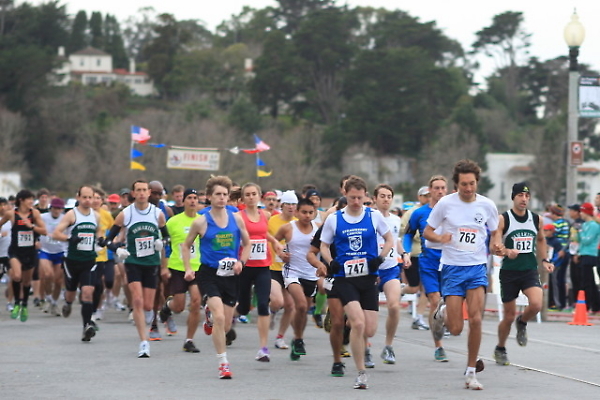 Prepare for a race like you might prepare for an exam when you were in school. Examine the course map to determine where mile markers are along with aid stations, portable toilets and medical support. You may not need the latter, but it's good information to know. And if you are driving to the race, bring the entry blank or print-out from the Internet for directions on where to go. Don't get lost! "I've done both extremes, says Chris Pedersen. "Show and go for mostly the short races and go totally OCD over the marathons. I plan the pace for every mile depending on the grade of the road, where to drink water and where to drink a sports drink. Learning the actual course is important too. Once you reach that dazed state during a race, it is easier than you think, to get lost if the field starts to spread out."
Photo: Start of the Waterfront 10 Miler in San Francisco photo by Catherine Cross Ujena Fit Club Comments and Feedback
Race Over the Hill
Wednesday, May 9th, 2012
"think in terms of running over and past the top of the hill"
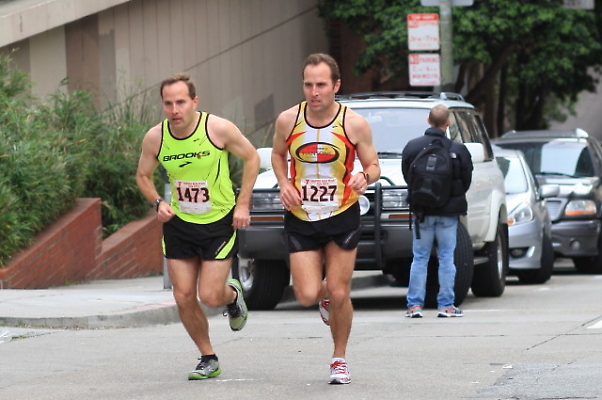 by Ujena Fit Club Coach Barry Anderson The majority of runners would probably tell you that they dislike running up hills in a race. The goal is often just to make it to the top of the hill where they can slow down and recover from their exertion for the next few 100 yards. That negative attitude can be a great asset to your racing strategy—particularly if you add one more element—Race Over the Hill. When approaching hill running in races, think in terms of running over and past the top of the hill. Your pace up the hill will likely have slowed somewhat from your race pace depending upon the angle of assent. What you should do as you reach the top of the hill is to accelerate back to your race pace, or faster, rapidly for the next 100 yards or more. If the uphill is followed by a slight downgrade you will likely be able to recover from your uphill effort somewhat even at this increased pace. This strategy will often allow you to pull away from your competitors and even cause them to loose confidence in staying with you through the rest of the race. Start practicing this strategy in your training runs as this rapidly increased pace will seem to be difficult at first and does require a good deal of effort. Once you master this racing technique, you will begin to see hills as an opportunity and just another bump in the road.
Above photo: The Thompson twins leading the Chinese New Year's 10k in San Francisco. photo by Catherine Cross Ujena Fit Club Comments and Feedback
I was a much better hill runner when I was younger...I can still really hold my own racing down a hilll but up a hill is another story...I wonder why it is different now?Bob Anderson 5/9/12 8:36 pm I would imagine as you get older you start to loose alot of muscle in your legs. going down a hill requires alot less effort on the muscles and puts more strain on the joints and bones. You have been running so long that your bones and joints are used to the impact but no matter what you do you will lose muscle as you get older and will have to work that much harder to keep it.Steven Richardson 5/11/12 7:45 am Luckily in age group competition you are running against others who are going through the same thing. I was a good uphill runner but could really turn it on going down hill ( sub-5 pace or faster). Not any longer.Richard Stiller 5/11/12 8:51 am What is the Best Race Warm-up?
Tuesday, May 8th, 2012
"Add your quick strides right before the race starts"
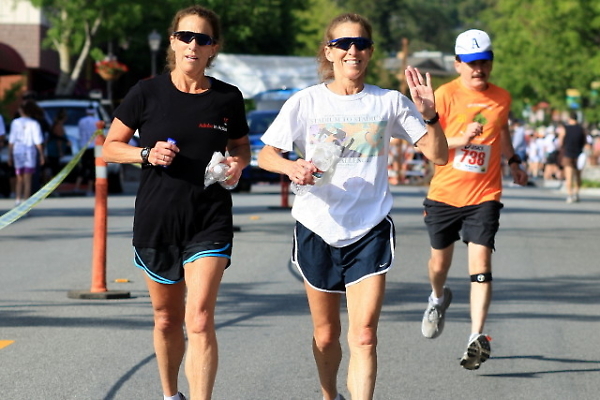 by Ujena Fit Club Coach Barry Anderson Generally speaking, the shorter the race, the more intense or complete your warm-up should be. In fact, many believe that for marathons, or even half marathons, the first miles of the race can be used to warm-up by starting slower than your projected race pace. Since the initial pace of 5Ks and 10Ks or shorter race is much faster, a complete warm-up should be used. For most runners, this warm-up would consist of some easy running of a mile or less and, hopefully, some gentle static stretching. Most would also include some quicker strides of 50 to 100 yards at or above their race pace in the last few minutes before the start. This traditional warm-up routine misses an important element of a thorough preparation to race. If you add some longer, fast paced runs after your initial easy running and stretching, you will be preparing your lungs, heart, and circulatory system to race also. These could be 1 or 2 runs of 200 to 400 yards at or slightly above race pace with a short recovery time between each. Try to do these 20 minutes or so before the race start followed by some easy running and additional stretching. Add your quick strides right before the race starts and you should be completely ready to race.
Above Photo: Honor and Shelley warming up before the recent 2012 Great Race in Los Gotos. Honor ran 26:40 for four miles at age 57. The warm-up must have worked. Photo by Catherine Cross
Comments and Feedback
I saw Steve Scott before the start of the Carlsbad 5000 a couple of years ago. He told me that he had to warm up a lot more since turning 40...I think that day he ran a sub 15 5k!!!Bob Anderson 5/8/12 12:56 pm I always did two miles and then strides. Scott was correct. I don't race much anymore but even before a harder workout I run slowly for 25-30 minutes, do strides and then go do the workout,Richard Stiller 5/8/12 8:46 pm Before my last race I did 2.25 slow about 45 minutes out then did a few real short strides about 20 minutes out. Was the longest warmup I have done but I also had the best race time since I started back.Steven Richardson 5/9/12 7:07 am Run Point-to-Point on Turns
Thursday, May 3rd, 2012
"Though it is not always possible, try to keep to the inside on all turns."
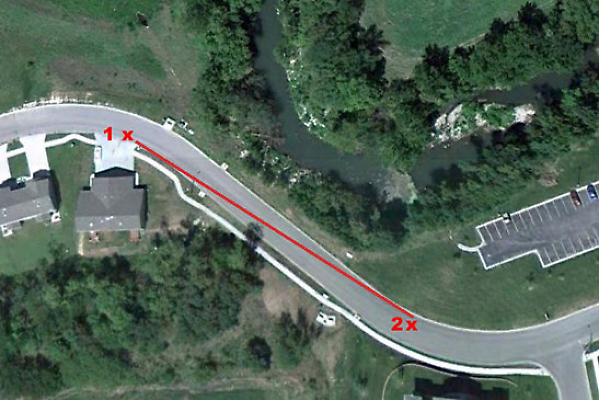 by Ujena Fit Club Coach Barry Anderson Nearly every one has heard the phrase; “The shortest distance between two points is a straight line.”—and that applies to your racing as well. Though not a road race, one of the most talked about distance races in Olympic history was the 5000 meter final in 1972. This was a race that featured, among others; Finland’s Lasse Viren and one of America’s best know distance runners of all time, Steve Prefontaine. By most estimations, it is believed that Prefontaine ran as much as 40 meters further than Viren during the race by running to the outside of lane one, or in lane 2 or 3, during most of the turns. Viren won the race over Prefontaine (who finished 4th) by 2 seconds—or approximately 10-15 meters. No one will ever know if the extra 40 meters would have made a difference in the outcome of the race as Viren was one of the great distance racers and tacticians of all time—but why give your competitors or the clock an edge. Though it is not always possible, try to keep to the inside on all turns. For “S” type turns or winding roads keep to the inside of the first turn (point 1) then look ahead to the inside of the second turn (point 2) and run directly to that point in a straight line. It will save you a few yards each time you do and may make a difference of several seconds in your total race time.
Barry also participated in track and cross country as a middle distance and distance runner. This included competitive racing at the AAU club level beginning at age 13 and continued through high school, with five state championship top 5 finishes, and earned two letters in his college career. Comments and Feedback
I see a lot of runners not doing this. It is a simple thought but a good one. Just think about how many extra yards you would run in a marathon with a lot of turns...Bob Anderson 5/3/12 10:52 am Right Bob, and I saw lots of folks at Rock The Parkway just staying in their lanes like the car traffic would do, not finding the tangents--I knew you were not one of them as you sped to the finish the straightest possible.
Barry, I try to practice your technique ON THE WAY TO THE RACE, if not too much traffic--is that appropriate?Bruce Gilbert 5/3/12 2:18 pm As long as you don't get caught Bruce. As I remember, Ward Parkway is kind of a winding road so this may have been a good tip for that race...even through it is pretty simple. I have also seen it work well in track meets on staggered starts. You are running well—keep it going.Barry Anderson 5/3/12 6:59 pm If Pre did as you say I doubt he would have won but he might have nabbed that Bronze he lost is the last few meters. Viren was the better runner that day.Richard Stiller 5/4/12 8:06 am I totally agree Richard...the bronze maybe but not the gold or silver. Viren was the best runner and racer on that day and 4 years later. Much faster than people have given him credit for. He could really put the hammer down for a long push to the finish and would consistently run 1:55-1:57 for the last 800...even in the 10k. Think he may have also placed 5th in the 76 Olympic marathon...good range.Barry Anderson 5/4/12 9:43 am The timing of this article was so perfect. There were a lot of turns in the Ave of the Giants half marathon on Sunday. Most runners did not follow this advice, I did. I know it helped. My question, how do they measure a certified course?Bob Anderson 5/7/12 9:48 am I believe they measure the shortest distance that you could realistically run it without other runners to contend with. So many folks seemed zoned out and are just staying in a particular lane--maybe they think it would be rude to cut across, and it is rude if you are cutting off other runners to do it.Bruce Gilbert 5/7/12 9:54 am Pre would have had to shift to the 10k. He might have medalled there but not in the 5k. That turned out to be a kickers race which Viren won. But it was a near thing by his own admission.Richard Stiller 5/7/12 1:29 pm From what I understand viren was the master at being precisely at his best fitness for the biggest races. Ahead of his time.
And about the ave course, ken young certified it. He rides a calibrated bicycle (with people on radios on either side of the turn) in just the manner that barry described. From the way ken talks every course measurer SHOULD be doing it the same way.Daniel Huddleston 5/8/12 8:03 pm I measured courses for the TAC and the Pacific Association and we used a calibrated cycle. It was a burden as far as time was concerned but we knew the courses were accurate. I don't believe Garmins and G-Mapping is as accurate.Richard Stiller 5/8/12 8:42 pm Only one change to your comment, Bob, "was" should be "is". :) What Ken did for course standardization and record keeping is about on-par with what you did in expanding the knowledge base of running.Daniel Huddleston 5/9/12 7:36 am Hal Higdon Tip of the Day #17
Tuesday, March 27th, 2012
"In the Taper, you are not training the muscles, you're resting them..."
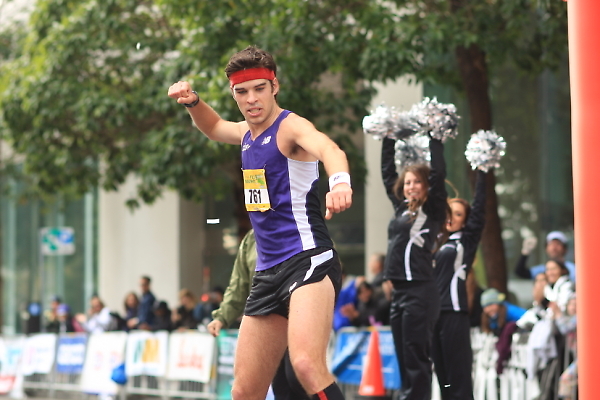 In the taper before an important race, especially the marathon, you're not training the muscles, you're resting the muscles. It's a time in your training when rest is usually best. Cutting back on miles is good for your legs, less so for your mind. Running can be addictive, so don't rush around doing silly things when you're supposed to be resting. Relax!
"Among my most enjoyable activities is helping runners train for the marathon. I estimate that I have assisted a half million runners reach the finish line of 26 mile 385 yard races," says Hal Higdon Comments and Feedback
Hal Higdon Tip of the Day #15
Tuesday, February 21st, 2012
Comparing One Workout With Another?
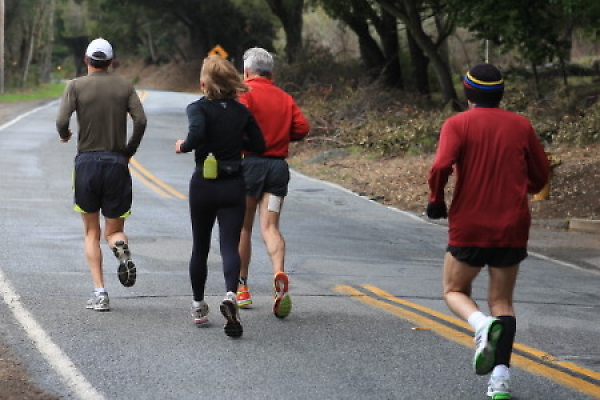
Photo Above: Bob, Bill, Rich and JoAnn on a training run in Los Altos Hills. Photo by Waitman Gobble Ujena Fit Club "Among my most enjoyable activities is helping runners train for the marathon. I estimate that I have assisted a half million runners reach the finish line of 26 mile 385 yard races," says Hal Higdon
Comments and Feedback
Hal Higdon Tip of the Day #14
Thursday, February 16th, 2012
Wear new shoes in your next race!
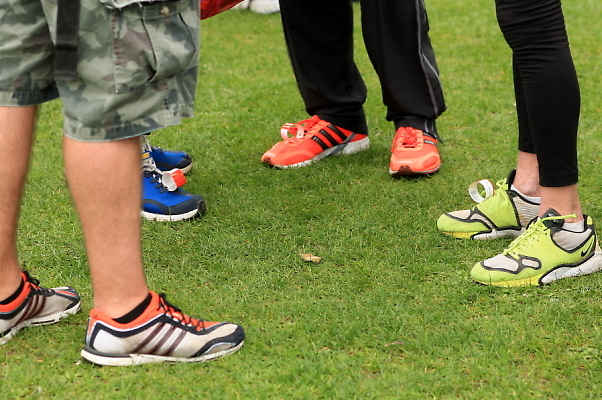
Photo Above: Some runners after the Together With Love races Feb 12, 2012. photo by Catherine Cross Ujena Fit Club "Among my most enjoyable activities is helping runners train for the marathon. I estimate that I have assisted a half million runners reach the finish line of 26 mile 385 yard races," says Hal Higdon
Comments and Feedback
A racing tip from Bob Anderson
Tuesday, February 14th, 2012
"Eating Meat the Night Before Racing Is Working For Me"
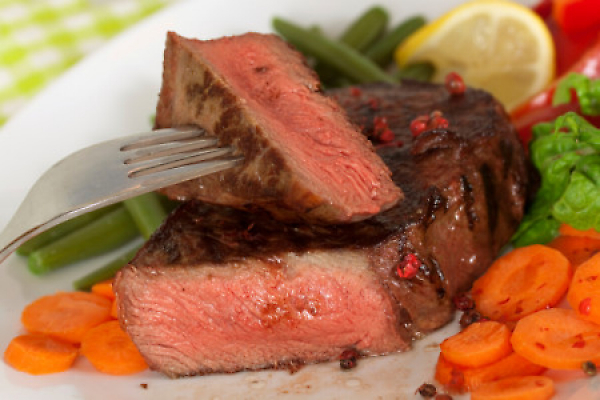
I have run out of fuel in races many times in the past and it seems like by adding the meat I don't run out of fuel. But don't confuse running out of fuel with running short on training, however. A Long Run: Bob Anderson is celebrating 50 years of running and racing by running 50 races in 2012. If that wouldn't be enough, he added to the challenge. The total number of miles races must be at least 350 miles and the average pace must be under 7 minutes per mile. After seven races he is on pace. A movie is being filmed called A Long Run. Follow his progress. Comments and Feedback
Hal Higdon Tip of the Day #12
Thursday, February 9th, 2012
Don't stop and start too Quickly...it can cause injury!
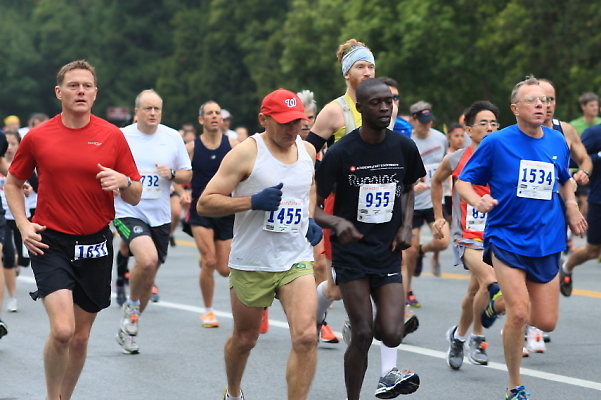
Photo Above: Golden Gate Park is a great place to run. There are probably at least 20 races a year to choose from. Photo by Catherine Cross Ujena Fit Club "Among my most enjoyable activities is helping runners train for the marathon. I estimate that I have assisted a half million runners reach the finish line of 26 mile 385 yard races," says Hal Higdon Comments and Feedback
Training Secret from Rich Stiller
Friday, February 3rd, 2012
New twist on increasing your speed - Run Every Other One
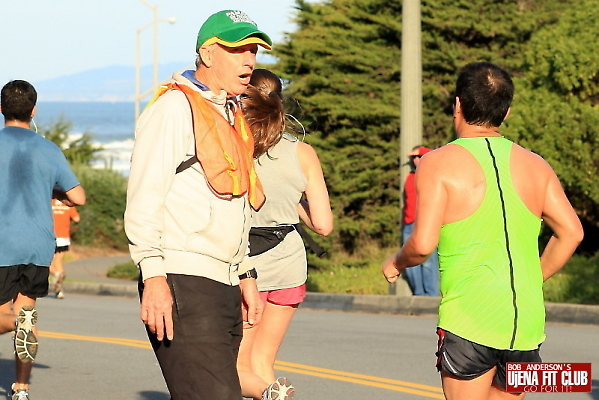
Photo Above: At the seven mile mark of the Kasier SF Half Marathon Feb 5, 2012. Photo by Catherine Cross Ujena Fit Club. Rich Stiller is going to be one of the featured runners in the new film "A Long Run." Director Michael Anderson says, "The focus of this full-length documentary is on Bob Anderson, the founded of Runner's World, who is celebrating 50 years of running but it is also abut runners he knows or well meet along the way." Comments and Feedback
Hal Higdon Tip of the Day #9
Sunday, January 29th, 2012
When You Get Injuried, Find Out Why?
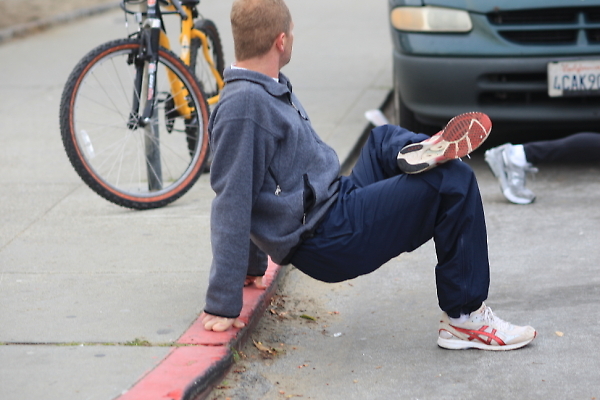
Photo Above: A runner stretching before the start of the DSE Waterfront 5k race recently in SF. photo by Catherine Cross Ujena Fit Club "Among my most enjoyable activities is helping runners train for the marathon. I estimate that I have assisted a half million runners reach the finish line of 26 mile 385 yard races," says Hal Higdon
Comments and Feedback
I am still trying to figure out what is going on with my hamstrings. I don't call these issues injuries...I call them situations and I do think there is always a solution to every situation. At least I am still racing...BUT I still do have situations!!! Thanks Hal for your tips...like your advice!!!Bob Anderson 1/29/12 11:05 pm Hal Higdon Tip of the Day #7
Wednesday, January 25th, 2012
Be Careful in Buying Cheap Running Shoes
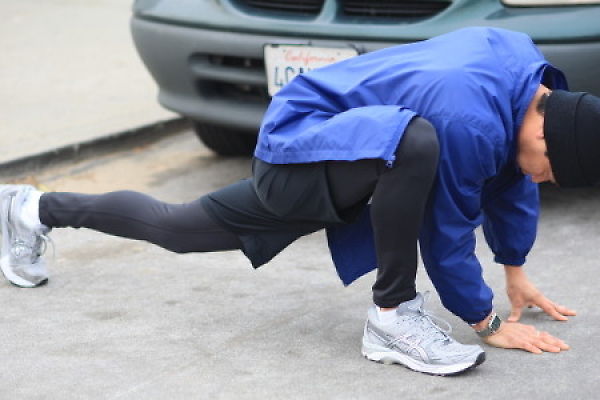
Photo Above: These are not the cheap shoes, it pays to have a few pairs of good quality shoes. Stretching before the Waterfront 5k held recently in San Francisco. Photo by Catherine Cross UjENA FIT Club and "A Long Run - the movie" "Among my most enjoyable activities is helping runners train for the marathon. I estimate that I have assisted a half million runners reach the finish line of 26 mile 385 yard races," says Hal Higdon Comments and Feedback
From Ceci Hopp St Geme
Monday, January 23rd, 2012
This Works For My Hamstrings
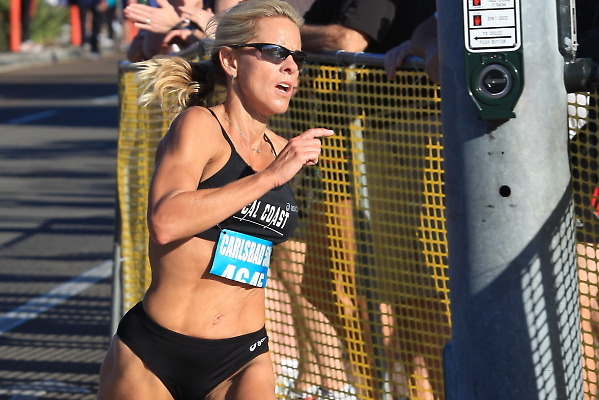
Photo Above: Ceci racing at the 2009 Carlsbad 5000. She finished in 18:18. Photo by Catherine Cross UjENA FIT Club Ceci Hopp St Geme has been a top level competitor for more than 30 years. In 1992 and 1996 she qualified for the Olympic Trials in three events. She is an assistant High School cross-country coach. Ceci is married with six children. A UjENA FIT Club Interview is coming soon.
Comments and Feedback
Hal Higdon Tip of the Day #4
Sunday, January 22nd, 2012
How Many 20 Milers?
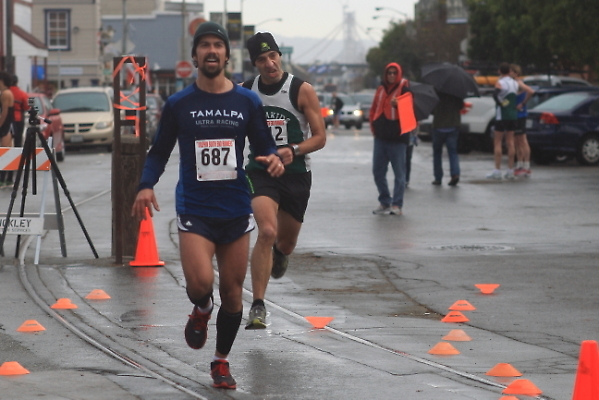
Photo Above: Close finish at the DSE Waterfront 10 Mile January 22nd in San Francisco photo by Catherine Cross Ujena Fit Club "Among my most enjoyable activities is helping runners train for the marathon. I estimate that I have assisted a half million runners reach the finish line of 26 mile 385 yard races," says Hal Higdon Comments and Feedback
Hal Higdon Tip of the Day #2
Thursday, January 19th, 2012
Use It Or Lose It
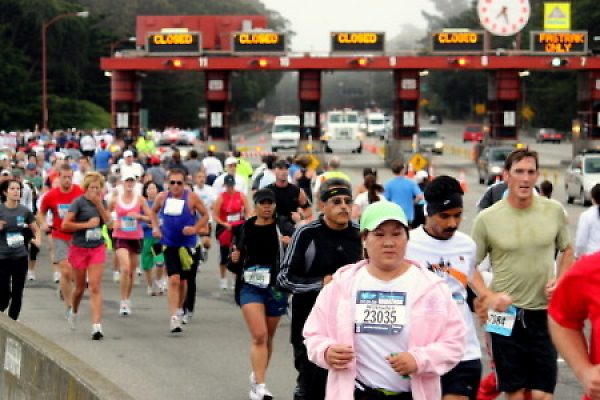
Photo Above: San Francisco Marathon runs across the Golden Gate Bridge photo by Waitman "Among my most enjoyable activities is helping runners train for the marathon. I estimate that I have assisted a half million runners reach the finish line of 26 mile 385 yard races," says Hal Higdon Comments and Feedback
Threshold-mile workout
Monday, January 2nd, 2012
Increase Your Leg Speed
 by Rich Stiller This is one workout that I have been using on and off for years. Run a warmup of 1-2 miles Then run 800-1000 meters at AT pace. This is roughly 20 seconds a mile slower than your 10k race pace. On a heart monitor, this is roughly 85-90% of max. Walk 200 meters Run 4 x 400 meters at mile pace. Walk 200 meters after each 400. Your mile pace is roughly 14 percent of your 10k race time. So 14% of 40 minutes for example is 5:36 or 84 seconds per 400. Run another 800-1000 meters at AT pace Warm down 1-2 miles This workout helps with leg speed while working your anaerobic threshold. Comments and Feedback
This sounds like a good workout...once I am back 100% I want to try it. Maybe we can do it together at Foothill?Bob Anderson 1/2/12 6:19 pm One of my secret training ideas...
Tuesday, December 6th, 2011
Secret Weapon Every Runner Needs
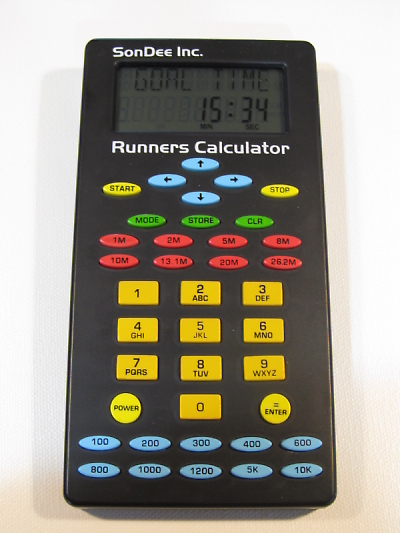 by Sonny Workman Runners Calculator, I invented this product. I have been coaching xc/track for 17+ years now and am an avid runner myself. I hated figuring out race goal splits for my athletes and myself! I love to train in a way that the runner will learn to dominate small segments of the eventual race goal distance. I will do alot of 200m/300m/400m/600m/800m/1000m/1200m and mile repeats for the 5K. When I do these repeats I will run them @ race goal pace and thats when it gets tricky. Now, how many can figure out their 1000m goal pace split without spending literally minutes and a lot of paper? Well, not anymore. With the Runners Calculator you can figure out any split withing 2-3 seconds! You can even store your race goals by name and event. When you need to know a split, it's there- saved for you! Now thats a secret weapon any runner should have in their arsenal! Comments and Feedback
5x3 inches, 2 AAA batteries.. Internal memory in case batteries go bad. Sonny Workman 12/7/11 1:37 am Tape it!
Monday, December 5th, 2011
Sometimes Simple Things Work
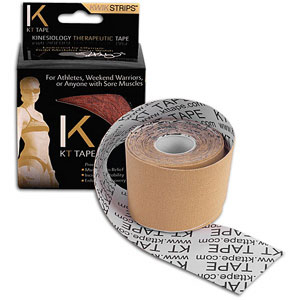 by Bob Anderson I know a lot of people are using athletic tape these days. I can hardly run a race where I don't see someone wearing tape. There are several companies that are selling tape made just for athletes. I have been taping for a long time. I have used scotch tape, duct tape and more recently the special Athletic Tape like KT Tape Kinesiology. The main point is that is does work. I put on a piece of tape on my hamstring the last two days. When I feel a little pulling, I put it on. It gives me support and helps me get through a workout or even a race. I have used tape on my achilles Tendon and calfs too.
I felt a little tugging right before running the Ujena 10k race recently in Cabo. I did not have any Athletic tap around so I used duct tape. I taped half way around the hamstring and it worked. There are a lot of different ways to tape and a lot of ideas. For sure do not go all the way around the leg. That can cut the blood flow and cause other issues. So, if you have something bothering you give this a try. But be sure to do it before something really goes bad. There is a point when it is too late for this to be effective. In addition to tape, there are also Hot patches that work. In addition to the support, these patches also brings heat to the area. That increaes blood flow and you want that. Made for people with arthritis but they work for me. Comments and Feedback
By the way, I would have used the KT tape in Cabo if I had it but I only had Duct Tape available. Anyone else doing any taping?Bob Anderson 12/6/11 11:04 pm Since the KT tape won't stick I may try some duct tape. I have a roll in the garage.Richard Stiller 12/13/11 4:21 pm |


 "Among my most enjoyable activities is helping runners train for the marathon. I estimate that I have assisted a half million runners reach the finish line of 26 mile 385 yard races," says
  The harder or further you run the more time the body needs to recover. It's a simple concept but one many of us find difficult to adhere to. When your muscles are sore from a strong workout that is a positive. That's how we improve our fitness and/or get faster at racing. When we fail to provide adequate recovery time before the next hard workout, that is a training negative. Recovery time is training time. When your muscles and tendons are regenerating themselves that is training . Never think of recovery time as down time. You can always do an activity between hard workouts that uses different muscle groups than those that are sore. Or you can take a day off occasionally like I do. It's not a fitness crime.
 This is not really a training or racing secret but the message is so good. I was posting my workout from yesterday in my training log. In addition to posting my workout here on line, I also post in my training log. Many times there I go into more details. There was a quote by Ann Landers that caught my attention: "There are really only three types of people: those who make things happen, those who watch things happen and those who ask, what happened." This is so true. It is the same about running and racing. I know I make things happen for me. This is why I think setting goals is so important. The goal can be to start running, or to run a race in two months, or to break 22 minutes for 5k, or whatever. The main thing is to set goals. Then go after them. If by some chance, you don't make your goal. Then move on and set a new one.
 I believe that eating meat the night before a race has helped my performances. I eat 8 oz of lean meat (or even steak tartare), mash potatoes, streamed broccoli and one glass of red wine the night before my races. I like to eat at least 12 hours before the start. Then that morning I eat half a banana and take one glu pack before the start. If I am racing a half or 10 miles, I will take another glu pack at about six miles. This is working better than eating only pasta the night before, at least for me.
 This is one of my favorite secret workouts. I have never been a big advocate of running mass interval workouts like 12 x 400 or 6 x 800. They wear me down. But if I know a group, like my running club, is doing a workout like this and I want some fast work, what I will do is run every other one. So if the other runners are doing 12 x 400 I might be only running 6 x 400. So 400 fast, 400 jog and so on. When the workout is complete, I am still strong and my next day recovery is much better. If I can, I will stay up with the faster runners on the hard reps and jog in the back during the slow ones. I did this once with one lunch time training group and a fast runner complimented me afterwards on staying up with him on all twelve of the 400's. Of course I couldn't tell him the truth. After all it was a secret workout.
 Go get a McDavid neoprine pull on brace for your hamstring and do five sets of 10 hip swings on each leg front to back each day easy..leg straight in the front with flexed foot and break at the knee in the back....as a former ballet dancer I am very flexible but had hamstring issues for years until Bill Sumner got me going on hip swings and they saved my hamstrings...I think the non static gentle stretch combined with adjusting your pelvis into the correct position to run does the trick. Now that we do it with the high school kids it has cut hip/groin/hamsting issues in half. Good luck! Ceci
 Photo: Note the duct tape on my hamstring photo by Addison Fitzgerald UjENA FIT Club


Copyright 2023 UjENA Swimwear · Site Map · Feedback · Tell A Friend · Nominate a Race
Leaderboard · UjENA 5K · Double Road Race · UjENA Jam · UjENA Network
